

How SoftWave Therapy Works
Non-invasive acoustic-wave therapy for knee, shoulder, hip, back, and sports-related pain at our Westwood clinic. Sessions take 15 to 20 minutes, with no needles or medication.
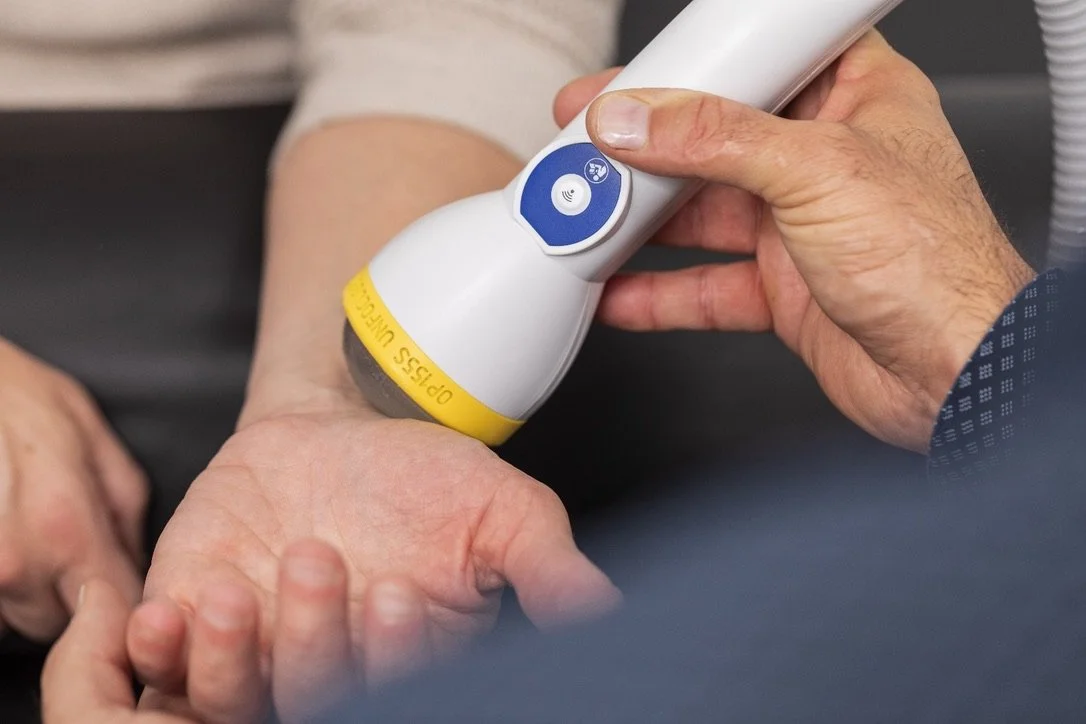

What is SoftWave
SoftWave is a non-invasive acoustic-wave therapy that delivers acoustic energy to targeted areas of the body. Treatment is designed to support circulation, connective-tissue response, mobility, and recovery without needled or surgery.
What the Research says
SoftWave’s FDA clearance includes activation of connective tissue, temporary increases in local blood circulation, and relief of minor muscle aches and pains.
Some conditions, including plantar fasciitis and certain tendinopathies, are listed separately under Health Canada licensing rather than as specific FDA-cleared indications. That distinction matters, so we state it clearly.
Independent research on extracorporeal shockwave therapy, the broader treatment category SoftWave belongs to, has studied applications across sports medicine injuries, chronic low back pain, and knee osteoarthritis. Systematic reviews have reported improvements in pain and/or function in some studied populations, although results vary by condition, treatment protocol, and study quality.
How Shockwave Therapy works
SoftWave is a form of acoustic-wave therapy within the broader shockwave therapy category. It uses mechanical energy to create targeted tissue responses that may support circulation, mobility, and recovery.
- 1
Physical
The stimulusAcoustic waves deliver mechanical energy into targeted tissue, creating the stimulus that begins the treatment response.
- 2
Chemical
The signalThat stimulus can activate local cellular and biochemical responses associated with circulation and tissue activity.
- 3
Biological
The responseOver time, those responses may support connective-tissue activity, mobility, and the body's recovery process.
Where SoftWave Is Being Studied
Shockwave research is stronger for some problems than others. Here is where the evidence stands today.
Knee pain
A 2024 umbrella review of eight meta-analyses found shockwave therapy improved knee osteoarthritis pain and function compared with sham treatment.
Research on advanced arthritis is still early, which is why every knee starts with an assessment.
SoftWave therapy for knee pain →Shoulder pain
A 2003 JAMA trial of 144 people found shockwave therapy improved function, reduced pain, and shrank calcium deposits compared with sham.
There is also short-term supporting evidence for frozen shoulder when shockwave is added to usual care.
SoftWave therapy for shoulder pain →Hip pain
A 2025 meta-analysis of 714 people found focused shockwave therapy reduced outer hip pain in the medium term.
Research in hip osteoarthritis is still early, and some hip pain starts in the lower back.
SoftWave therapy for hip pain →Back pain
A 2021 meta-analysis of 10 trials and 455 people found lower pain at one month and better disability scores at one and three months.
Sciatica and nerve pain are not well studied, so those cases are screened carefully first.
SoftWave therapy for back pain →Sports injuries
A 2022 review found moderate-certainty added benefit for chronic mid-tendon Achilles pain when shockwave is paired with loading exercise. A 2011 trial in 40 athletes supports its use for hamstring tendon pain.
Not every tendon responds the same way. One in-season trial in jumping athletes found no benefit over placebo.
SoftWave therapy for sports injuries →Study results describe groups of people, not a promise for any one person. Your consultation is where we look at whether SoftWave fits your situation.

What to expect during treatment
Before you commit to a treatment plan, your first visit includes a mapping session. We move the SoftWave device across the general area of concern, and differences in sensation can help identify where treatment should be focused. You’ll experience the process in real time, giving you a better understanding of how SoftWave feels and whether it makes sense to continue before committing to a treatment plan.

Benefits of SoftWave Therapy
✔ Non-invasive, no needles, no downtime, no drugs
✔ FDA-cleared for relief of minor muscle aches and pains
✔ Typical sessions take 15 to 20 minutes
✔ Most clients return to normal activity the same day